
Introduction
We spend thousands of dollars on radios, night vision, and solar generators. But what happens if an EMP (Electromagnetic Pulse) or a massive solar flare hits? In a split second, all your unshielded electronics could be fried.
You don’t need a military bunker to protect your gear. You can build a military-grade shield in your garage for under $50. In this guide, I will show you how to build a DIY Faraday cage trash can that actually works.
⚡ What is a Faraday Cage?
A Faraday cage is simply a sealed enclosure made of conductive material. It blocks external static and non-static electric fields. Think of it as a “shield” that intercepts the EMP wave and conducts it around your devices, keeping the inside safe.
Why a Trash Can?
- It’s Metal: Galvanized steel is an excellent conductor.
- It’s Cheap: A 20-gallon can costs about $30 at Home Depot.
- It’s Spacious: You can fit a Baofeng radio, a laptop, and a solar panel inside.
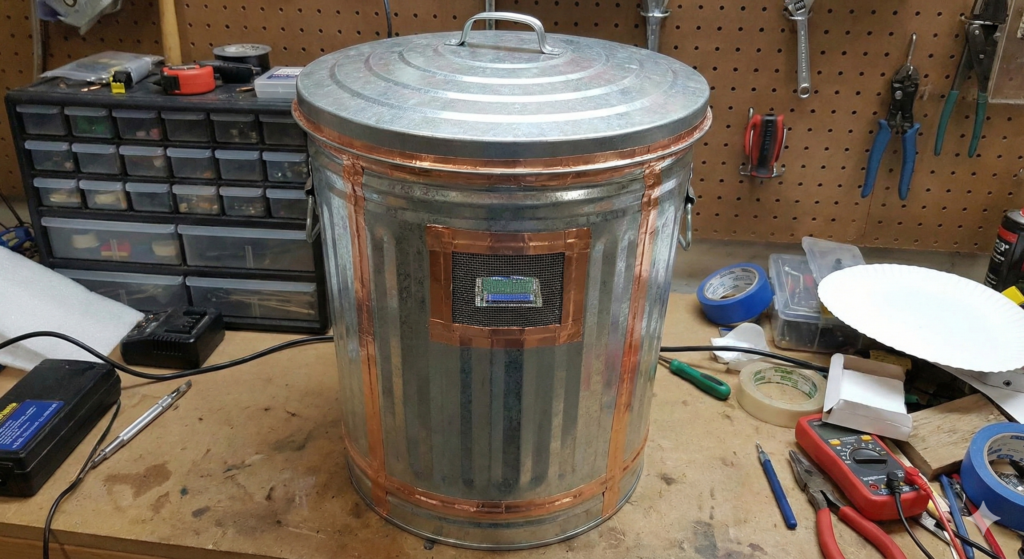
🛠️ The Build: Step-by-Step
Building a DIY Faraday cage trash can is easy, but you must get the details right. A single gap can ruin the protection.
Step 1: The Shopping List
- Metal Trash Can: Must be metal (zinc-plated or galvanized steel). Ideally with a tight-fitting lid.
- Aluminum Tape: Metallic HVAC tape (not duct tape!).
- Insulation Material: Cardboard boxes, bubble wrap, or old towels.
- Weather Strip (Optional): To seal the lid gap.
Step 2: Insulate the Inside (Critical!)
The most common mistake beginners make is letting their electronics touch the metal walls. If your radio touches the metal can, the shield fails. Line the bottom and sides of the can with cardboard or thick fabric. You need to create a “floating” layer for your gear.
Step 3: Seal the Seams
Most trash cans have seams where the metal is folded. To be safe, tape over the vertical seam on the inside with your Aluminum Tape. This ensures perfect conductivity all around.
Step 4: The Lid Seal
This is the weak point. An EMP wave can sneak through the tiny gap between the lid and the can.
- Method A (Temporary): Wrap the items in foil, put them in, close the lid, and tape the lid shut with Aluminum tape.
- Method B (Permanent): Install a conductive metal mesh gasket or simply rely on a very tight mechanical fit (and tape it when an alert comes).
📦 What Should You Store Inside?
You can’t protect everything. Focus on “Grid-Down” essentials:
- Communications: Your Baofeng UV-5R and spare batteries.
- Power: A small solar panel and charge controller.
- Light: LED flashlights and headlamps.
- Information: An old Kindle filled with survival PDF books (or a USB drive).
- Medical: Digital thermometers or glucometers (if needed).
❓ FAQ: Will It Actually Work?
Do I need to ground the trash can?
This is the biggest debate in the prepper community.
For Lightning: Yes, grounding helps.
For EMP (E1 pulse): Grounding generally does not help and might actually act as an antenna, bringing the surge into the cage.
Verdict: For a simple trash can build, do not ground it. Just insulate it well from the floor (put it on a wooden pallet or rubber mat).
Can I use a microwave oven instead?
A microwave is designed to keep waves in (2.4 GHz), not necessarily to keep a broad-spectrum EMP out. It is better than nothing, but a sealed metal trash can is superior.
How do I test it?
Put a cell phone inside, seal it, and try to call it.
If it rings: Your shield is leaking (the signal got in).
If it goes straight to voicemail: Congratulations, you have blocked the signal! (Note: Cell towers are powerful, so if it blocks a cell signal, it’s a good sign for EMP protection).
Conclusion
An EMP event is a low-probability but high-impact disaster. Building a DIY Faraday cage trash can is a cheap insurance policy. For less than the price of a tank of gas, you can ensure that when the lights go out, your communication gear will still be the only thing working.
Ready to build? Go get a can this weekend.